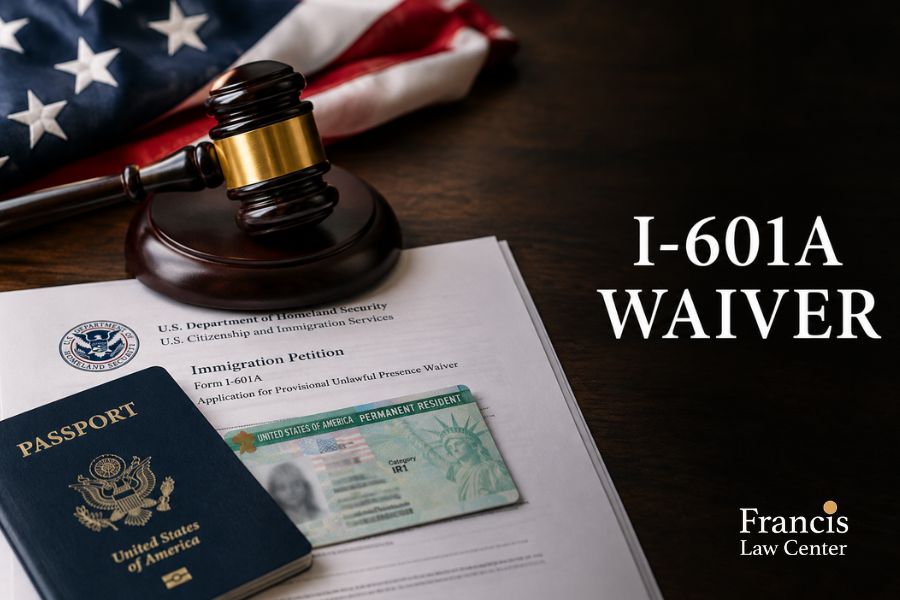

Being placed in removal proceedings can feel like the end of the road toward a green card, but for some immigrants, a 601A waiver may still open a path forward. Understanding how this waiver interacts with removal proceedings can help families make informed decisions instead of assuming all hope is lost.
At Francis Law Center, our immigration attorneys work with clients facing removal proceedings while still pursuing lawful status through a qualifying relative. We help evaluate whether a 601A waiver remains an option and guide clients through the added complexity that removal proceedings can create.
What a 601A Waiver Does
A 601A waiver allows certain immigrants who are inadmissible due to unlawful presence to request forgiveness before leaving the United States for their green card interview abroad. This waiver is available to individuals with a qualifying relative, such as a U.S. citizen or lawful permanent resident spouse or parent, who would suffer extreme hardship if the applicant were unable to return.
Without an approved 601A waiver, leaving the country for a visa interview could trigger a multi-year ban on returning. The waiver removes that risk in advance, allowing the applicant to attend their interview abroad with confidence that unlawful presence alone will not block their return.
How Removal Proceedings Change the Process
Being in removal proceedings does not automatically disqualify someone from applying for a 601A waiver, but it does add extra steps. Immigration officials generally require that the removal case be administratively closed, dismissed, or terminated before a 601A waiver can move forward. This typically means:
- Requesting administrative closure or termination from the immigration judge
- Coordinating with ICE attorneys who may need to agree to the closure
- Timing the waiver filing carefully around the status of the court case
- Continuing to attend all scheduled court hearings until the case is resolved
Missing a hearing or misunderstanding the required coordination between the immigration court and USCIS can seriously jeopardize both the removal case and the waiver application.
Why Legal Guidance Matters in Your 601A Waiver Process
The interaction between immigration court and the 601A waiver process is technical and unforgiving of mistakes. An immigration attorney can help determine whether administrative closure is realistic, communicate with the immigration court and opposing counsel, and prepare a strong hardship case for the qualifying relative.
Because so much depends on precise timing and cooperation between agencies, trying to manage a removal case and a 601A waiver without guidance can lead to unnecessary delays or a lost opportunity. Every case is different, and the right strategy depends on the specific stage of the removal proceedings and the strength of the underlying waiver case.
Move Forward in your 601A Waiver Journey With Francis Law Center
Facing removal proceedings while hoping for a green card can feel overwhelming, but a 601A waiver may still be within reach depending on the circumstances. Working with an experienced immigration attorney can help clarify what is possible and what steps need to happen first.
Founding attorney Dr. Jae Francis Lee and the team at Francis Law Center have experience helping clients coordinate 601A waivers alongside active removal cases. With offices in Chicago, Schaumburg, IL, and Madison, WI, a team that speaks four languages, and nationwide representation, the firm brings careful strategy to complex cases.
If you are in removal proceedings and still hope to pursue a green card through a 601A waiver, contact Francis Law Center to talk through your options and the safest way forward.