Experienced Immigration Attorneys Serving Elmhurst, IL
Immigration decisions can shape where a family lives, whether loved ones can reunite, and how someone plans for a secure future. People pursue lawful permanent residence, often called a green card, for many reasons, including family unity and long-term stability. For individuals and families in Elmhurst, the process may involve unfamiliar legal requirements, extensive documentation, and government review that takes time.
Francis Law Center helps Elmhurst residents understand their immigration options and prepare for the steps ahead. An attorney can assess eligibility, identify concerns that may affect a case, and explain how different approaches fit a client’s goals. The firm emphasizes practical guidance and careful preparation so clients can make decisions with a clearer understanding of their circumstances.
Helping Elmhurst Residents Understand Their Immigration Options
Choosing an immigration application requires more than identifying a benefit you want to obtain. Your previous filings, entries and departures, family relationships, and available records may all affect eligibility. For Elmhurst applicants, an incomplete response or inconsistency between documents can lead to additional questions, processing delays, or a denial.
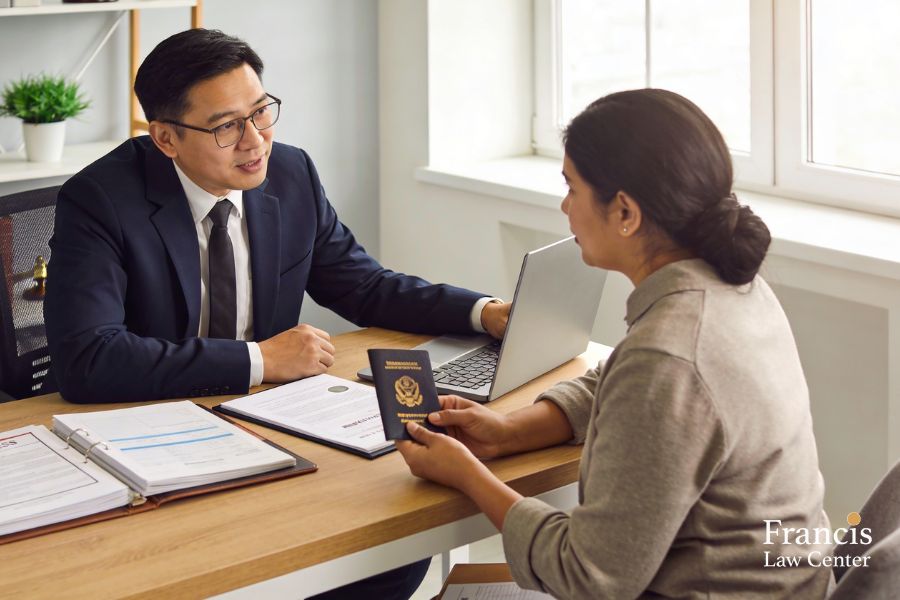
An immigration lawyer can review the applicable requirements, explain which records matter, and help you prepare a complete account of your history. Depending on the case, representation may involve preparing for a USCIS interview, responding to an evidence request, completing consular processing, or appearing in immigration court.
Some matters also require a coordinated review of several issues. A past visa overstay, an earlier petition, a pending removal case, or relatives living abroad can affect the available options. Francis Law Center focuses exclusively on immigration law, allowing the team to consider these connections rather than treating each filing as an unrelated application.
Immigration Representation in Elmhurst, IL with Francis Law Center
Francis Law Center provides nationwide immigration representation and multilingual services. The firm maintains offices in Chicago, Schaumburg, IL, and Madison, WI, assisting clients with family immigration, citizenship, humanitarian matters, and removal defense.
Founding attorney Dr. Jae Francis Lee leads the practice. As a first-generation immigrant, Dr. Lee brings personal familiarity with the immigration process alongside his legal experience.
The firm emphasizes thorough research, organized documentation, and clear communication. Clients receive explanations of their responsibilities, potential concerns, and the stages their case may involve.
An exclusive immigration focus also supports attention to changes in agency policies, filing requirements, and interview practices. For Elmhurst families, understanding these developments can be important when preparing a USCIS application, pursuing an immigrant visa abroad, or responding to immigration court proceedings.
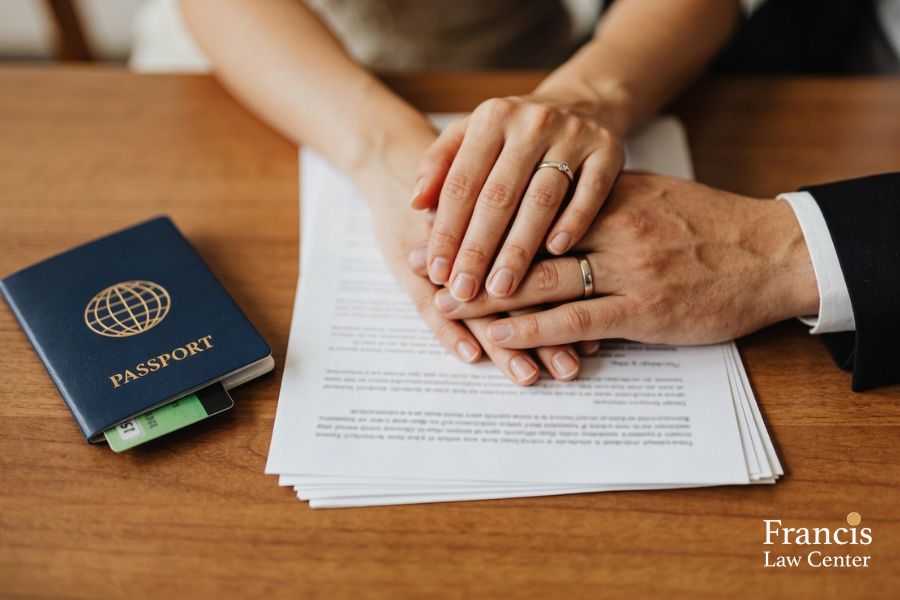
Marriage Green Card
A marriage-based green card may allow an eligible foreign spouse of a U.S. citizen or lawful permanent resident to establish permanent residence in the United States.
A marriage-based case generally requires evidence that:
- The marriage is legally valid.
- The couple has a genuine marital relationship, rather than a marriage entered into primarily to obtain immigration benefits.
- The foreign spouse satisfies applicable admissibility requirements, including those involving immigration history and certain criminal matters.
Form I-130 typically establishes the qualifying family relationship. The foreign spouse’s location and eligibility then determine whether the case proceeds through adjustment of status in the United States or consular processing abroad.
If permanent residence is granted before the couple’s second wedding anniversary, the spouse generally receives conditional permanent resident status. Removing those conditions requires a later filing supported by evidence that the marriage was entered into in good faith. Joint filing is ordinarily required, although qualifying exceptions may apply.
When USCIS questions whether a marriage is authentic, officers may conduct a Stokes interview. Spouses may be questioned separately, and their answers may be compared. Preparation should focus on understanding the procedure and providing truthful, accurate responses.
An immigration attorney can help Elmhurst couples organize documents showing their shared life. Relevant evidence may include joint financial accounts, tax returns, leases, insurance policies, photographs, and affidavits. Counsel can also help couples understand the questions and documentation they may encounter during an interview.
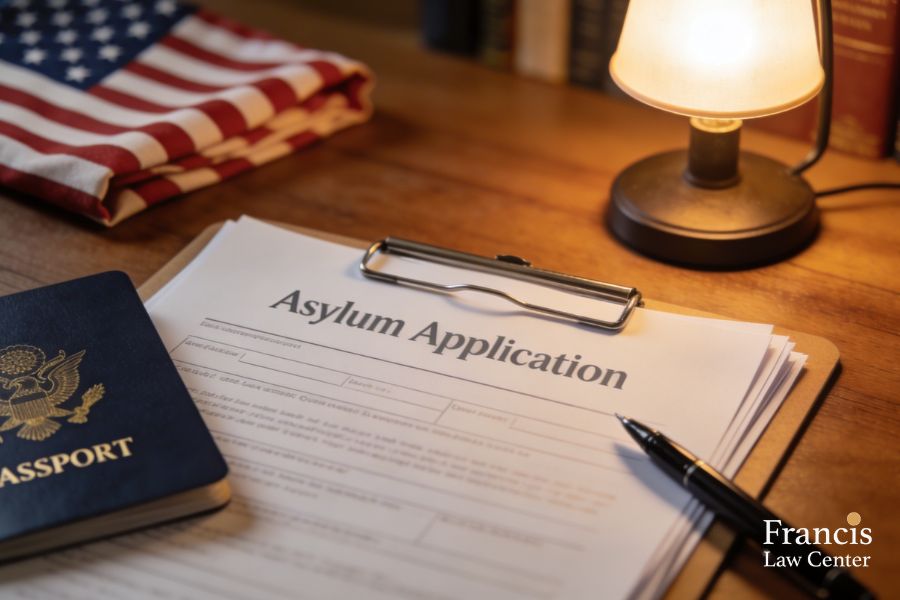
Asylum
Asylum may protect someone who has experienced persecution or fears persecution in their home country because of:
- Race
- Religion
- Nationality
- Political opinion
- Membership in a particular social group
The procedure depends partly on whether the person is in removal proceedings. An applicant who is not in immigration court generally pursues affirmative asylum through U.S. Citizenship and Immigration Services. Someone facing removal may request defensive asylum before an immigration judge.
A well-prepared claim explains what happened, why returning home would be dangerous, and how the harm relates to a protected ground. Supporting materials may include a personal declaration, country-condition reports, medical or other corroborating records, witness statements, and expert testimony.
A grant of asylum allows a person to remain in the United States and may provide opportunities for family reunification and later permanent residence, subject to the relevant requirements. Employment authorization is also an important consideration in asylum matters.
For Elmhurst applicants, an immigration attorney can help develop a clear timeline, identify supporting evidence, and prepare for an interview or hearing. Legal review can also address concerns involving prior entries, criminal records, or missed filing deadlines.
K-1 Visa
A U.S. citizen who plans to marry a partner living overseas may consider a K-1 fiancé(e) visa. This option allows a qualifying foreign fiancé(e) to enter the United States to marry the petitioning U.S. citizen.
The couple generally must establish that:
- Their relationship is genuine and continuing.
- They intend to marry within 90 days of the foreign fiancé(e)’s arrival.
- Both partners are legally free to marry.
After entry, the couple must marry within the required 90-day period. The foreign spouse may then apply for adjustment of status, submitting marriage documentation and other evidence needed to establish eligibility.
K-1 preparation may involve relationship records, financial sponsorship documents, security screening, and a consular interview. Limited opportunities to meet in person or gaps in the couple’s documentation may require closer review.
Francis Law Center can help Elmhurst clients compare the fiancé visa route with a marriage-based immigrant visa. An attorney can also prepare the petition, organize supporting records, and evaluate prior marriages or sponsorship concerns that could affect the K-1 process.
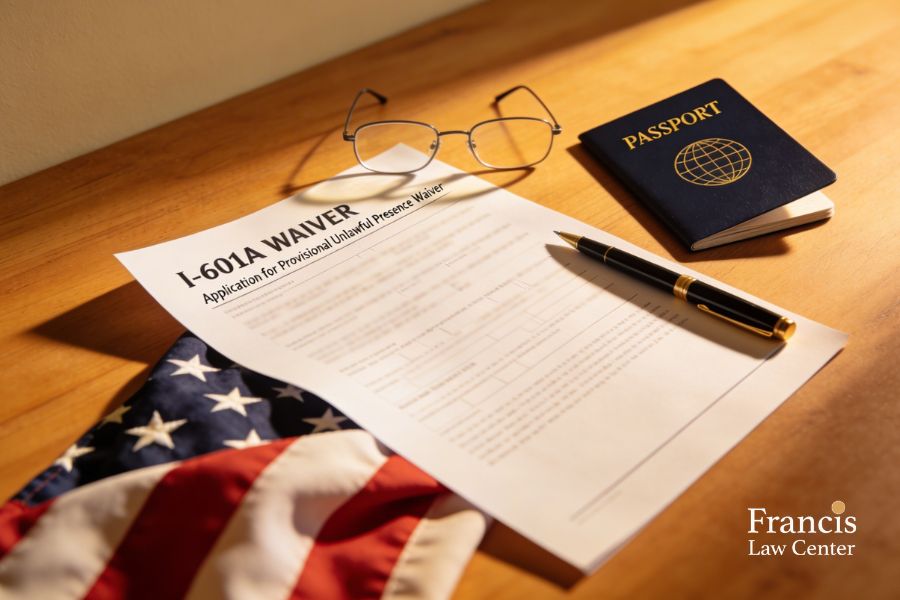
601A Waiver
For some immigrant-visa applicants, leaving the United States for a consular interview can create a serious obstacle to returning. The provisional unlawful presence waiver, commonly called a 601A waiver, allows eligible applicants to address certain unlawful presence concerns before departure.
Depending on the amount of unlawful presence accrued, leaving the country may trigger a three-year or ten-year reentry bar. Approval of an immigrant-visa petition does not automatically resolve that issue.
A provisional waiver generally requires evidence that refusal of admission would cause extreme hardship to a qualifying U.S. citizen or lawful permanent resident spouse or parent.
Relevant evidence may address medical conditions, financial responsibilities, caregiving needs, emotional hardship, educational concerns, and other family circumstances. An immigration attorney can help Elmhurst families explain how those factors work together and support the hardship claim.
The waiver addresses unlawful presence rather than every possible ground of inadmissibility. Reviewing the applicant’s full history is therefore important before making plans to leave the United States.
An abusive relative’s unwillingness to assist does not necessarily prevent a survivor from seeking immigration benefits. The Violence Against Women Act (VAWA) allows certain qualifying spouses, children, and parents to file a self-petition without relying on the abusive family member’s cooperation.
VAWA protections may be available to eligible survivors of any gender. A case generally must establish a qualifying relationship, battery or extreme cruelty, and good moral character, along with the other applicable requirements.
Depending on eligibility and the stage of the case, a successful self-petition may support employment authorization and a path toward lawful permanent residence.
VAWA protections include important confidentiality safeguards, and the abusive relative generally is not notified of the filing. Francis Law Center can help Elmhurst survivors evaluate available documentation, including police reports, health-care records, counseling notes, and affidavits.
The immigration case may also intersect with divorce, custody, or protective-order proceedings. An immigration attorney can explain how those matters may affect the immigration filing and identify issues that require coordination with appropriate Illinois family-law counsel.
T Visa
A T visa may offer protection to survivors of certain severe forms of human trafficking. Applicants must meet requirements concerning their presence in the United States and generally comply with reasonable law-enforcement requests for assistance, subject to applicable exceptions.
A case generally needs to show that the applicant:
- Was a victim of qualifying trafficking.
- Would experience extreme hardship involving unusual and severe harm if removed.
- Meets admissibility requirements or qualifies for a waiver.
Approved T visa holders may receive employment authorization and access to certain benefits. Permanent residence may become available after additional statutory requirements are met.
Evidence can be difficult to gather when exploitation involved threats, coercion, debt bondage, or work arrangements that produced few formal records. An immigration attorney can help T visa applicants in Elmhurst document their experiences and, when appropriate, coordinate with law enforcement, victim-service organizations, and mental-health professionals.
Additional Immigration Services at Francis Law Center
A person’s immigration needs may involve several related applications or legal concerns. Francis Law Center handles family-based immigration, humanitarian protection, citizenship, and removal defense, helping Elmhurst clients address connected issues through one immigration firm.
Family-Based Immigration
Reuniting relatives may require an initial petition, a waiver, or a later application to preserve permanent resident status. In addition to the services discussed above, Francis Law Center assists with:
- Spousal immigrant visas
- I-751 removal of conditional residency
- Parole in Place for qualifying military families
- Parent immigration visas
- Immigration waivers for specific grounds of inadmissibility
For mixed-status families in Elmhurst, reviewing these options together can help establish a long-term approach to lawful family reunification.
Humanitarian and Citizenship
Some clients need protection that is not available through a traditional family petition. Others are ready to explore whether they qualify for U.S. citizenship. Additional services include:
- U visas for certain qualifying crime victims who assist law enforcement
- Citizenship and naturalization applications, including matters involving travel history or criminal concerns
- Temporary Protected Status (TPS) for eligible nationals of designated countries
Each program provides different benefits and has its own limitations. Some may offer employment authorization or protection from removal, while certain options may support a later application for permanent residence. An attorney can help Elmhurst residents understand these distinctions before pursuing a particular benefit.
Removal Defense
Being placed in removal proceedings can threaten a person’s ability to remain with family and continue their life in the United States. Immigration court involves procedural requirements, deadlines, and hearings that differ from the ordinary USCIS application process.
Francis Law Center reviews each client’s circumstances to identify a suitable defense strategy. Depending on eligibility, possible options may include asylum, withholding of removal, cancellation of removal, waivers, or other available relief.
Preparing removal defense can require detailed testimony, supporting records, country-condition reports, expert evidence, and appearances at multiple hearings. An immigration attorney can help Elmhurst respondents understand court expectations, protect their rights, and present the strongest available evidence supporting their case.
Immigration Guidance for Your Next Step
Immigration questions often affect decisions about marriage, work, travel, and family stability. Whether you are seeking permanent residence, requesting humanitarian protection, pursuing a waiver, or defending against removal, understanding the requirements and potential risks is an important part of planning.
Francis Law Center provides Elmhurst individuals and families with immigration-focused guidance and careful case preparation. The firm helps clients assess their circumstances, address potential complications, and understand what the next stage of the process may involve.
If you need assistance with an immigration matter in Elmhurst, IL, contact Francis Law Center to arrange a confidential consultation with an immigration attorney.
Elmhurst Immigration FAQs
Do I need an immigration attorney for my case?
You are not legally required to hire a lawyer. However, an immigration attorney can help Elmhurst residents evaluate eligibility, organize evidence, and identify concerns before filing. Legal guidance may also help avoid errors that could delay processing or contribute to a denial.
What is the difference between a marriage green card and a K-1 fiancé(e) visa?
A marriage green card is an option for an eligible person who is already married to a U.S. citizen or lawful permanent resident. A K-1 visa is available to a qualifying foreign fiancé(e) of a U.S. citizen who intends to enter the United States, marry that citizen within 90 days, and then pursue adjustment of status.
How long does a marriage-based green card usually take?
Processing times vary according to the application route, the spouse’s location, the office handling the case, visa availability where applicable, and government backlogs. There is no single timeline for every couple, and a case may take many months or longer to reach a decision.
What is a Stokes interview, and should I be worried about it?
A Stokes interview is a more detailed marriage interview that USCIS may conduct when it questions whether a marriage is genuine. Officers may interview spouses separately and compare their answers. Understanding the format can help couples prepare to respond honestly and accurately without guessing or memorizing scripted responses.
Who qualifies for asylum in the United States?
Asylum may be available to someone who has experienced persecution or has a qualifying fear of persecution connected to race, religion, nationality, political opinion, or membership in a particular social group. Applicants must also satisfy other eligibility requirements, including applicable filing deadlines.
What is a 601A provisional unlawful presence waiver?
A 601A waiver allows eligible immigrant-visa applicants to seek provisional forgiveness of certain unlawful presence before departing for a consular interview. The applicant generally must show that refusal of admission would cause extreme hardship to a qualifying U.S. citizen or lawful permanent resident spouse or parent. The waiver does not address every possible ground of inadmissibility.
How do VAWA cases differ from regular family petitions?
A qualifying survivor can submit a VAWA self-petition without relying on an abusive relative to file or cooperate. The case must meet VAWA’s specific requirements, and confidentiality protections generally prevent the abusive family member from being notified of the filing.
What protection does a T visa provide for trafficking survivors?
A T visa may provide qualifying trafficking survivors with lawful status, employment authorization, and access to certain benefits or services. Eligible holders may later seek permanent residence after meeting additional legal requirements.
Can I apply for more than one type of immigration relief at the same time?
Some people qualify for more than one immigration benefit or form of relief. Those options should be evaluated together to determine whether the filings are compatible, keep information accurate and consistent, and avoid unintended consequences for another pending or potential case.
What should I bring to an initial consultation with an immigration attorney?
Bring passports, I-94 records, previous immigration applications and decisions, agency notices, arrest or court records, and marriage or divorce documents. For Elmhurst clients, these records can help the attorney understand the relevant history, identify possible concerns, and discuss appropriate next steps.