
For individuals who entered the United States without admission or parole and now face removal proceedings, the prospect of obtaining permanent residency can seem daunting. However, if you have married a U.S. citizen, there are pathways to legalizing your status and securing a green card. At Francis Law Center, we understand the complexity of these cases and are here to guide you through every step of the process.
Understanding the Challenges
Entering the U.S. without admission or parole presents unique challenges when seeking permanent residency. Unlike those who entered with a visa or parole, you may be ineligible to adjust status within the U.S. under most circumstances. Additionally, removal proceedings add another layer of legal hurdles that must be addressed.
Fortunately, U.S. immigration law recognizes the validity of family-based immigration petitions, even for individuals in removal proceedings. A bona fide marriage to a U.S. citizen can serve as the foundation for pursuing lawful permanent resident status.
Key Steps to Take
- Proving a Bona Fide Marriage The cornerstone of your case is demonstrating that your marriage is genuine and not solely for immigration benefits. This requires gathering strong evidence, such as:
- Joint bank account statements
- Leases or mortgages in both names
- Photographs documenting your relationship
- Affidavits from friends and family
- Filing Form I-130 (Petition for Alien Relative) Your U.S. citizen spouse must file Form I-130 with U.S. Citizenship and Immigration Services (USCIS) to establish the legitimacy of your relationship. Once approved, this petition demonstrates that a qualifying family relationship exists.
- Termination or Administrative Closure of Removal Proceeding Because you are in removal proceedings, your case will proceed before an immigration judge. When the I-130 is approved, you can request the immigration court to terminate or administratively close your removal proceedings to proceed with consular processing abroad.
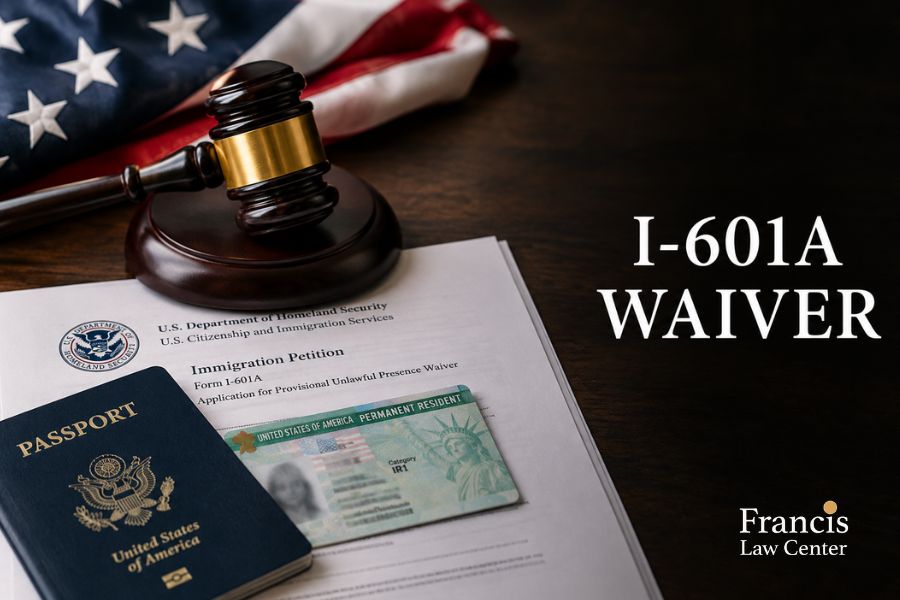
- Pursuing an I-601A Waiver If you entered the U.S. without being admitted or paroled, you may need a waiver of inadmissibility to address this issue. One common pathway is the I-601A Provisional Unlawful Presence Waiver, which allows you to demonstrate that your removal would cause extreme hardship to your U.S. citizen spouse. However, if you filed an I-589 application within six months of your last U.S. entry and have not engaged in unauthorized employment, you might be able to bypass the I-601A waiver process and proceed directly to your consular interview.
- Consular Interview Once your I-601A waiver is approved, you need to return to your home country to attend a visa interview at a U.S. consulate. This process must be carefully managed to minimize risks of triggering additional grounds of inadmissibility.
Common Challenges and How We Can Help
- Removal Proceedings Timeline: Managing deadlines and hearings during removal proceedings is critical. We ensure your immigration case aligns with court requirements.
- Extreme Hardship Standard: Demonstrating extreme hardship requires thorough documentation and persuasive arguments tailored to your specific circumstances.
- Unlawful Presence and Other Bars: We evaluate your case comprehensively to address all potential barriers to reentry or adjustment.
Why Choose Francis Law Center?
Our team at Francis Law Center has extensive experience handling complex immigration cases, including those involving removal proceedings and unlawful entries. We provide:
- Compassionate support during a stressful time
- Strategic legal advice tailored to your case
- Bilingual services in English and Spanish to assist diverse clients
Take the First Step Today
If you entered the U.S. without admission or parole, are in removal proceedings, and married a U.S. citizen, obtaining permanent residency is possible with the right legal strategy. Contact Francis Law Center to schedule a consultation and begin building your pathway to a secure future.