Dr. Jae Francis · Francis Law Center
If you’re living in fear of returning to your home country, you may have the right to stay in the United States. Dr. Jae Francis and the team at Francis Law Center have helped asylum seekers from Latin America, Africa, and around the world build strong cases — whether you’re filing a Form I-589 application with USCIS or defending against removal in immigration court.
Hablamos Español
Key Takeaways
- Asylum protects people in the U.S. who face persecution based on race, religion, nationality, political opinion, or social group membership (INA §208).
- Francis Law Center handles both affirmative asylum (filed with USCIS) and defensive asylum (raised in immigration court before an IJ).
- Missed the 1-year filing deadline? Exceptions exist for changed country conditions and extraordinary circumstances.
- Offices in Chicago, Schaumburg (IL), and Madison (WI). Hablamos Español.
- Call 866-868-1596 for a free case evaluation, or book a consultation with Dr. Jae Francis.
What Is Asylum, and Do You Qualify?
Asylum is a form of legal protection under the Immigration and Nationality Act (INA §208) available to people in the United States who have suffered persecution — or who have a well-founded fear of future persecution — in their home country. That persecution must be connected to one of five protected grounds: race, religion, nationality, political opinion, or membership in a particular social group.
Many people who qualify for asylum don’t realize they’re eligible. You don’t need to have entered the country through any particular process. Whether you arrived at a port of entry, crossed the border, overstayed a visa, or have been living in the U.S. for years, asylum may still be an option for you.
At Francis Law Center, Dr. Jae Francis evaluates each case individually. If asylum isn’t the right fit, other forms of humanitarian relief — including withholding of removal (INA §241(b)(3)) and protection under the Convention Against Torture (CAT) — may apply.
What Types of Asylum Cases Does Francis Law Center Handle?
Francis Law Center handles both major types of asylum cases — affirmative and defensive. The right approach depends on your current immigration situation.
Affirmative Asylum (Filed with USCIS)
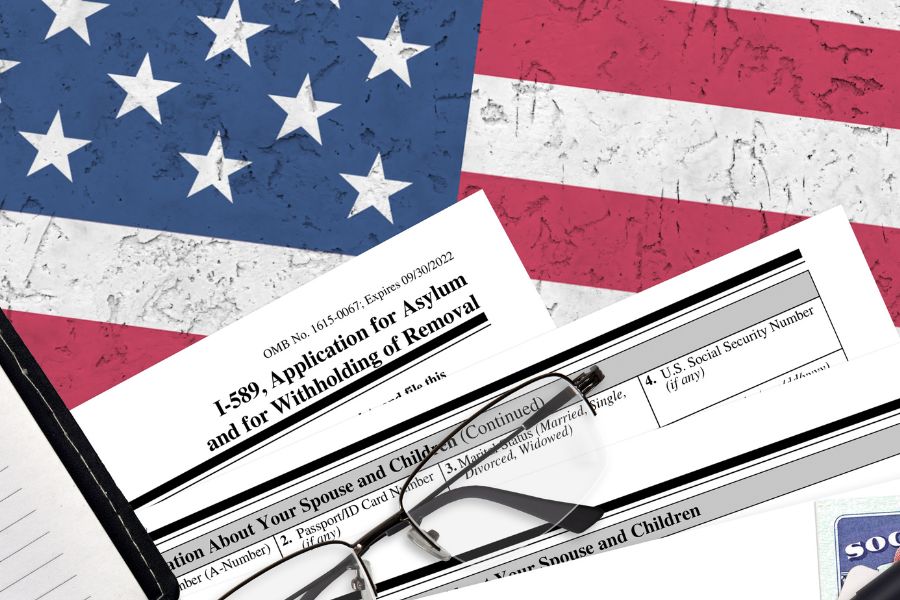
If you are not currently in removal proceedings, you can file an affirmative asylum application by submitting Form I-589 (Application for Asylum and for Withholding of Removal) to U.S. Citizenship and Immigration Services (USCIS). You will attend a non-adversarial interview with an asylum officer at a USCIS asylum office.
Dr. Jae Francis works with you to document your story, gather supporting evidence — country condition reports from the U.S. Department of State, medical or psychological evaluations, personal declarations — and prepare you for the asylum interview so you present your strongest possible case.
Defensive Asylum (In Immigration Court)
If you’ve received a Notice to Appear (NTA) and are in removal proceedings before an immigration judge (IJ) at the Executive Office for Immigration Review (EOIR), asylum can be raised as a defense against deportation. This is a more adversarial process with higher stakes.
Francis Law Center represents clients in immigration court proceedings in Illinois and Wisconsin, building a thorough evidentiary record and presenting your case before the judge. If you’ve been detained by ICE, time is critical — call us immediately.
Who Can Apply for Asylum?
You don’t need a “perfect” immigration story to qualify. These are real situations that bring people to Francis Law Center:
- You’ve been in the U.S. for a while and didn’t know you could apply. Many people live here for months or years before learning that asylum is an option. Even if time has passed, exceptions to the filing deadline may apply to your case.
- You received a Notice to Appear (NTA) and need a defense strategy. Being placed in removal proceedings is frightening, but it doesn’t mean you’ll be deported. Asylum is one of the strongest defenses available under INA §208.
- You missed the 1-year filing deadline. Federal law generally requires filing Form I-589 within one year of your last arrival in the U.S. But recognized exceptions exist — see the dedicated section below.
- You fled violence, threats, or persecution in your home country. Whether you left Guatemala, Honduras, El Salvador, Mexico, Venezuela, Cameroon, the Congo, Ethiopia, or another country, what matters is the nature of the persecution and the evidence supporting your claim.
- You’re a family member of an asylum applicant. Spouses and unmarried children under 21 may be included as derivative beneficiaries on a primary applicant’s Form I-589.
This list is not exhaustive. Many other circumstances may support an asylum claim. Call 866-868-1596 for a free case evaluation.
What If You Missed the 1-Year Asylum Filing Deadline?
It depends on your circumstances, and it may not be too late. This is one of the most common concerns we hear. Under 8 U.S.C. §1158(a)(2)(B), U.S. immigration law requires filing for asylum within one year of your last arrival. However, the statute provides two categories of exceptions:
- Changed circumstances: New violence in your home country, a shift in government, intensified persecution of your social group, or changes in U.S. law that now make you eligible.
- Extraordinary circumstances: Serious illness, legal disability, ineffective assistance of prior counsel, or other events beyond your control that prevented timely filing.
Dr. Jae Francis has experience preparing these arguments and presenting the evidence immigration judges and USCIS asylum officers need to see. If you’re worried about the deadline, the most important step is to speak with an experienced asylum attorney who can evaluate your specific situation.
Why Do Clients Choose Francis Law Center for Asylum?
Experienced Asylum Representation
Dr. Jae Francis handles both affirmative and defensive asylum cases, giving clients a single attorney who understands the full spectrum of asylum law — from USCIS asylum interviews to contested hearings before an immigration judge.
Local Offices Across Illinois and Wisconsin
With offices in Chicago, Schaumburg, and Madison, Francis Law Center is accessible to asylum seekers across both states. You work directly with your legal team — not a call center.
Bilingual Legal Team (Hablamos Español)
Our team communicates with you in the language you’re most comfortable in, so nothing gets lost in translation during the most important legal process of your life.
Compassionate, Thorough Case Preparation
Asylum cases require telling your story — often a painful one — in a way that meets strict legal standards. Dr. Jae Francis takes the time to understand your experience and builds a case that reflects both the human reality and the evidentiary requirements.
Frequently Asked Questions About Asylum
How long does the asylum process take?
Timelines vary significantly depending on whether you file affirmatively or defensively. Affirmative asylum cases with USCIS may receive an interview within several months, though processing times fluctuate. Defensive cases depend on immigration court backlogs in your jurisdiction — some courts in Illinois and Wisconsin have multi-year wait times. Dr. Jae Francis can give you a realistic timeline based on your specific situation.
Can I work while my asylum case is pending?
Yes, in most cases. You may apply for an Employment Authorization Document (EAD) by filing Form I-765 if your asylum application has been pending for 180 days without a decision attributable to you. This allows you to work legally in the United States while your case moves forward.
What evidence do I need for an asylum case?
Strong asylum cases typically include: your personal declaration (a detailed written account of the persecution you experienced or fear), country condition reports from the U.S. Department of State and reputable human rights organizations, news articles, medical or psychological evaluations if applicable, witness declarations, and any documentation of threats, violence, or discrimination. Francis Law Center helps you identify and assemble the right evidence for your claim.
Note: Every asylum case is unique. This is not an exhaustive list of required evidence.
What happens if my asylum case is denied?
If an affirmative asylum application is not granted by USCIS, your case may be referred to immigration court, where you can renew your asylum claim before an immigration judge. If denied in court, you may appeal to the Board of Immigration Appeals (BIA). In some cases, further review by a federal circuit court is possible. Dr. Jae Francis can advise you on your options at every stage of the process.
Do I need an attorney for asylum?
While you are legally permitted to file on your own (pro se), asylum law is complex. The legal standards for establishing persecution, the evidentiary requirements, and the procedural rules vary between USCIS and immigration court. An experienced asylum attorney understands how to frame your claim, what evidence to present, and how to prepare you for interviews or hearings. The consequences of a poorly prepared case can be severe, including denial and potential removal from the United States.
What other options exist besides asylum?
Depending on your situation, other forms of humanitarian relief may be available, including U Visas (for victims of certain crimes), T Visas (for victims of trafficking), VAWA (for victims of domestic abuse), TPS (Temporary Protected Status), or cancellation of removal. Dr. Jae Francis evaluates every case for all available relief.
You Deserve Peace of Mind
If you’re seeking asylum in Illinois or Wisconsin, take the first step. Dr. Jae Francis and the Francis Law Center team are ready to hear your story and help you understand your legal options. Read more about how to seek asylum in the U.S. on our blog.